
Two grading systems measure the same barrel in two different ways. Which one appears in your tender decides which test certificate the cargo has to carry.
Penetration grading is the older system. A standard needle loaded with 100 g is released onto the sample for five seconds at 25 °C, and how far it sinks, in tenths of a millimetre, is the grade. 60/70 means the needle travelled between 6.0 and 7.0 mm. The governing standards are ASTM D946 and AASHTO M20.
Viscosity grading measures something else: resistance to flow at 60 °C, which is roughly the hottest a pavement gets in service, and again at 135 °C, which is roughly the temperature in the mixing plant. India specifies binder this way under IS 73, which is why an Indian buyer writes VG-30 where a Gulf or African buyer writes 60/70.
The reason for the change is worth understanding. 25 °C is neither the service temperature of a road nor the working temperature of a plant. Two cargoes can penetrate almost identically at 25 °C and behave differently on a carriageway in May. Viscosity grading controls the binder at the temperatures where the road actually works.
These are the limits a consultant checks a VG cargo against. Note the first line: in IS 73, penetration is a minimum, not a band. The grade is set by the viscosity figures, not by the needle.
| Characteristic | Unit | VG-10 | VG-20 | VG-30 | VG-40 | Method |
|---|---|---|---|---|---|---|
| Penetration at 25 °C, 100 g, 5 s | 0.1 mm, min | 80 | 60 | 45 | 35 | IS 1203 |
| Absolute viscosity at 60 °C | poise | 800–1200 | 1600–2400 | 2400–3600 | 3200–4800 | IS 1206 (Pt 2) |
| Kinematic viscosity at 135 °C | cSt, min | 250 | 300 | 350 | 400 | IS 1206 (Pt 3) |
| Softening point (R&B) | °C, min | 40 | 45 | 47 | 50 | IS 1205 |
| Flash point, Cleveland open cup | °C, min | 220 | 220 | 220 | 220 | IS 1448 [P:69] |
| Solubility in trichloroethylene | %, min | 99.0 | 99.0 | 99.0 | 99.0 | IS 1216 |
| After thin film oven test — viscosity ratio at 60 °C | max | 4.0 | 4.0 | 4.0 | 4.0 | IS 1206 (Pt 2) |
| After thin film oven test — ductility at 25 °C | cm, min | 75 | 50 | 40 | 25 | IS 1208 |
Limits as published in IS 73:2013. Reproduced here for guidance only — the governing documents are the standard itself and the test report issued against the shipped cargo.
In trade conversation the two are treated as equivalent, and as procurement shorthand that is close enough to start with. As a certification it does not follow, and the difference is the one that gets cargo rejected at destination.
ASTM D946 fixes penetration for 60/70 in a band of 60 to 70 and says nothing at all about viscosity. IS 73 fixes absolute viscosity at 60 °C for VG-30 between 2400 and 3600 poise, and only asks that penetration be at least 45. A cargo can sit comfortably inside the 60/70 band and land either inside or outside the VG-30 viscosity window. Nothing but the test report on that specific cargo will tell you which.
So if your tender says VG-30, the certificate has to report absolute viscosity at 60 °C and kinematic viscosity at 135 °C, measured on the material being shipped. A certificate showing penetration, softening point and ductility and nothing else is an ASTM D946 certificate under another name, and a consultant will treat it as one.
The general paving binder across most Indian highway and urban work. Where a project schedule simply says “viscosity grade bitumen” without qualification, this is almost always what is meant.
A harder binder for heavy-traffic corridors, toll plazas, junctions and climbing lanes — anywhere loads are slow or standing and rutting is the failure mode. It is not a stiffer version of the same cargo; it is a different product.
Softer. Spray applications, surface dressing and colder design temperatures. IS 73 ties grade selection to the design maximum air temperature of the location, not to preference.
The general-purpose penetration grade through the Gulf, East Africa and much of South and Southeast Asia. This is the grade we hold and ship.
A softer penetration grade for cooler climates or where a specification calls for it directly. Available to order against a confirmed programme rather than from stock.
“Pen 60/70”, “bitumen 60–70” and “penetration grade 60/70” are the same thing. VG numbers and pen numbers are not interchangeable names for one scale and should never be written as though they were.
Four things are enough for a firm written offer: the standard your tender names, the quantity, the packing, and the destination port. If independent inspection at the load port is required, tell us who the buyer wants appointed.
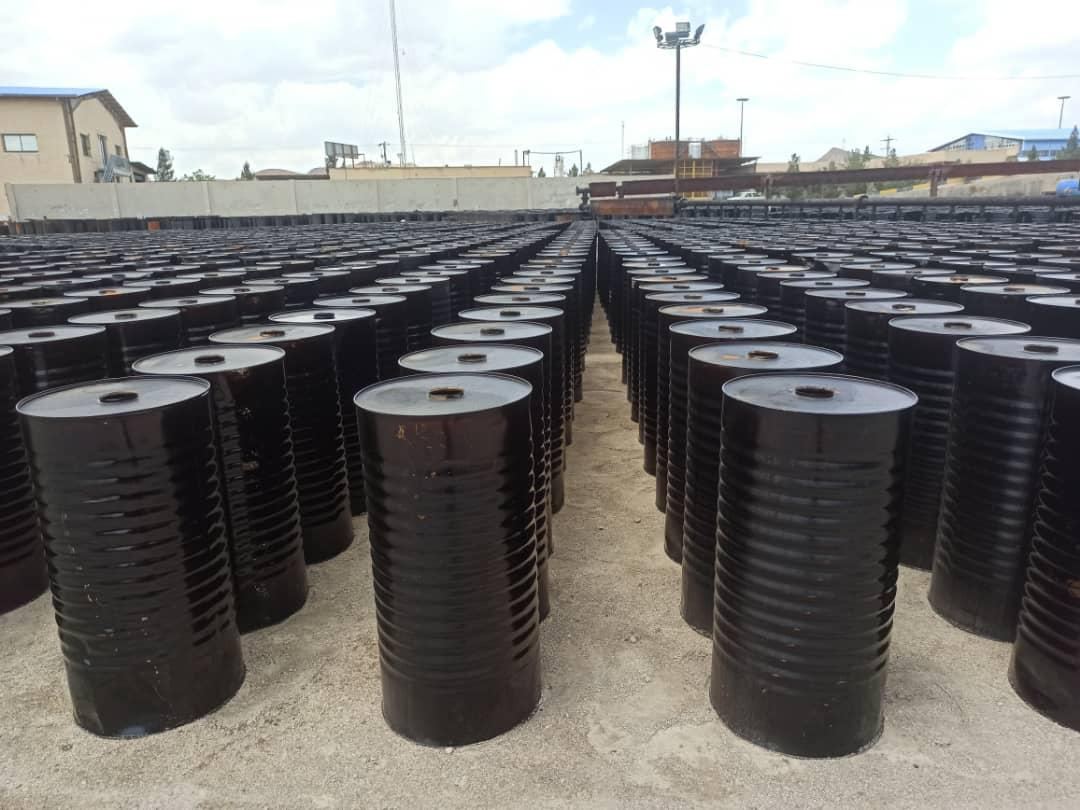
We supply penetration grade 60/70 to ASTM D946, in new steel drums and jumbo bags, FOB Sohar. Where a specification calls for VG-30, we quote against the IS 73 test schedule and the certificate reports the viscosity parameters measured on the cargo that ships.
If your tender calls for VG-40, send us the schedule before anything else. It is a materially harder binder than 60/70 and we would rather tell you plainly whether we can meet it than ship against it and hope the laboratory at the discharge port agrees.